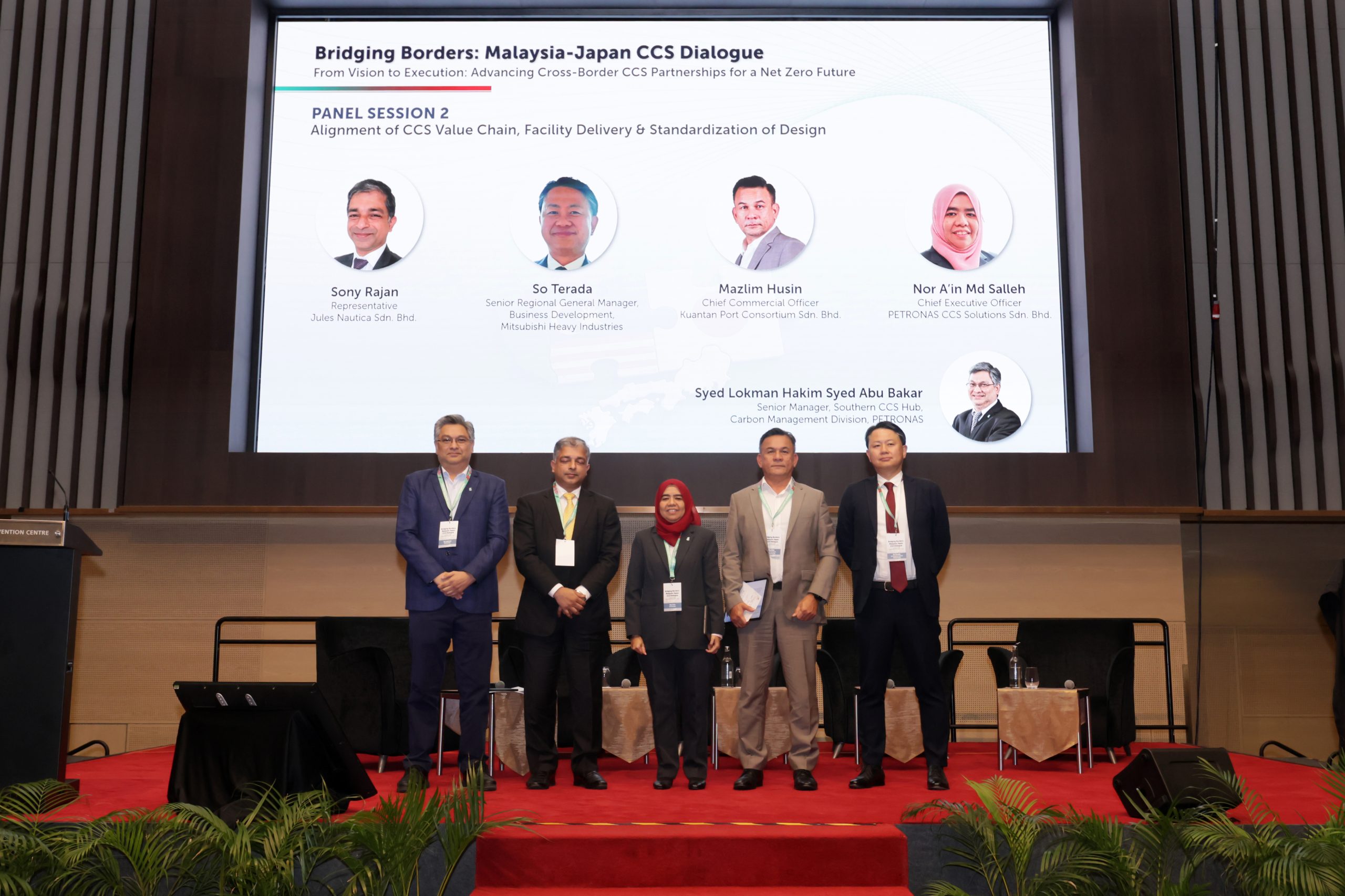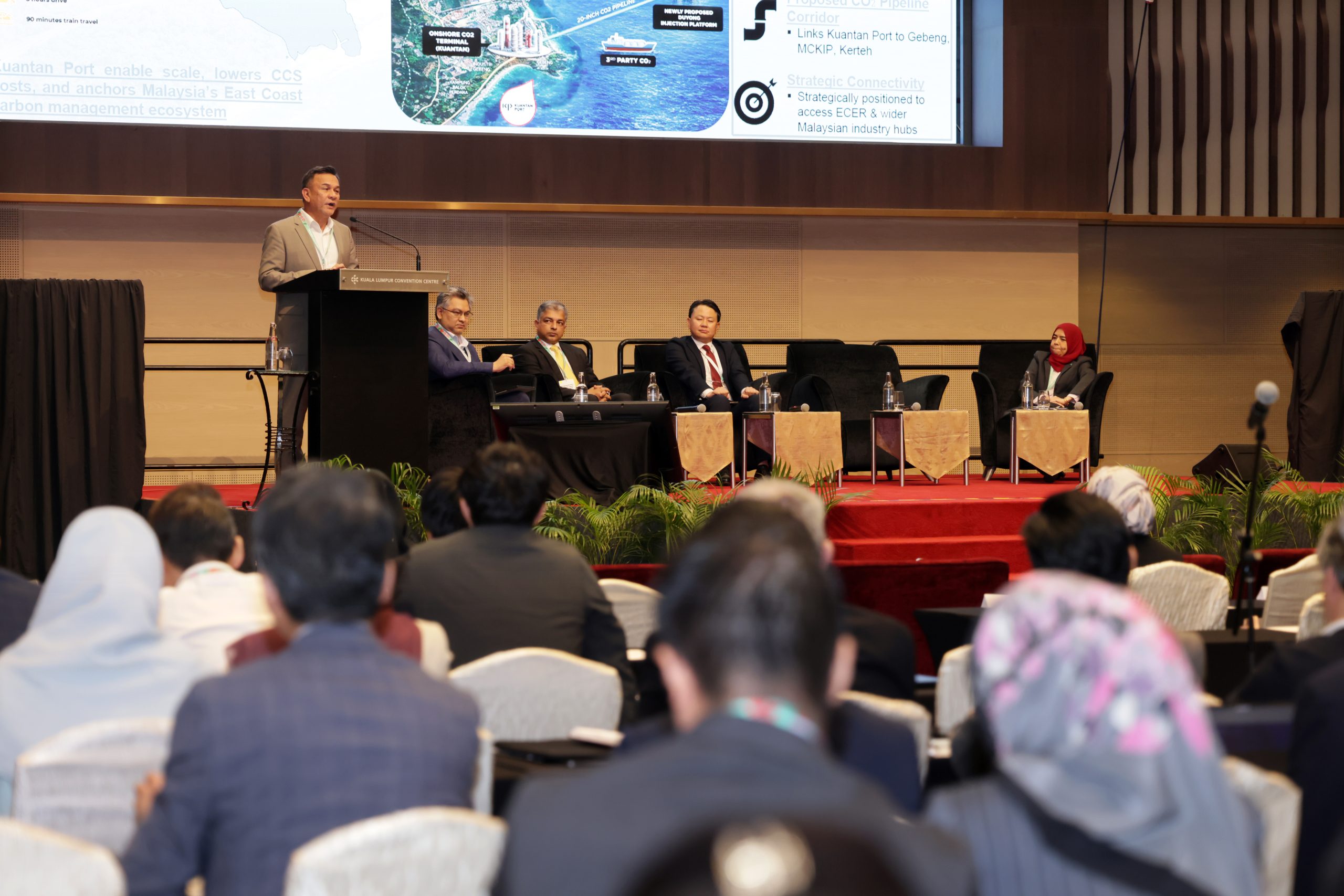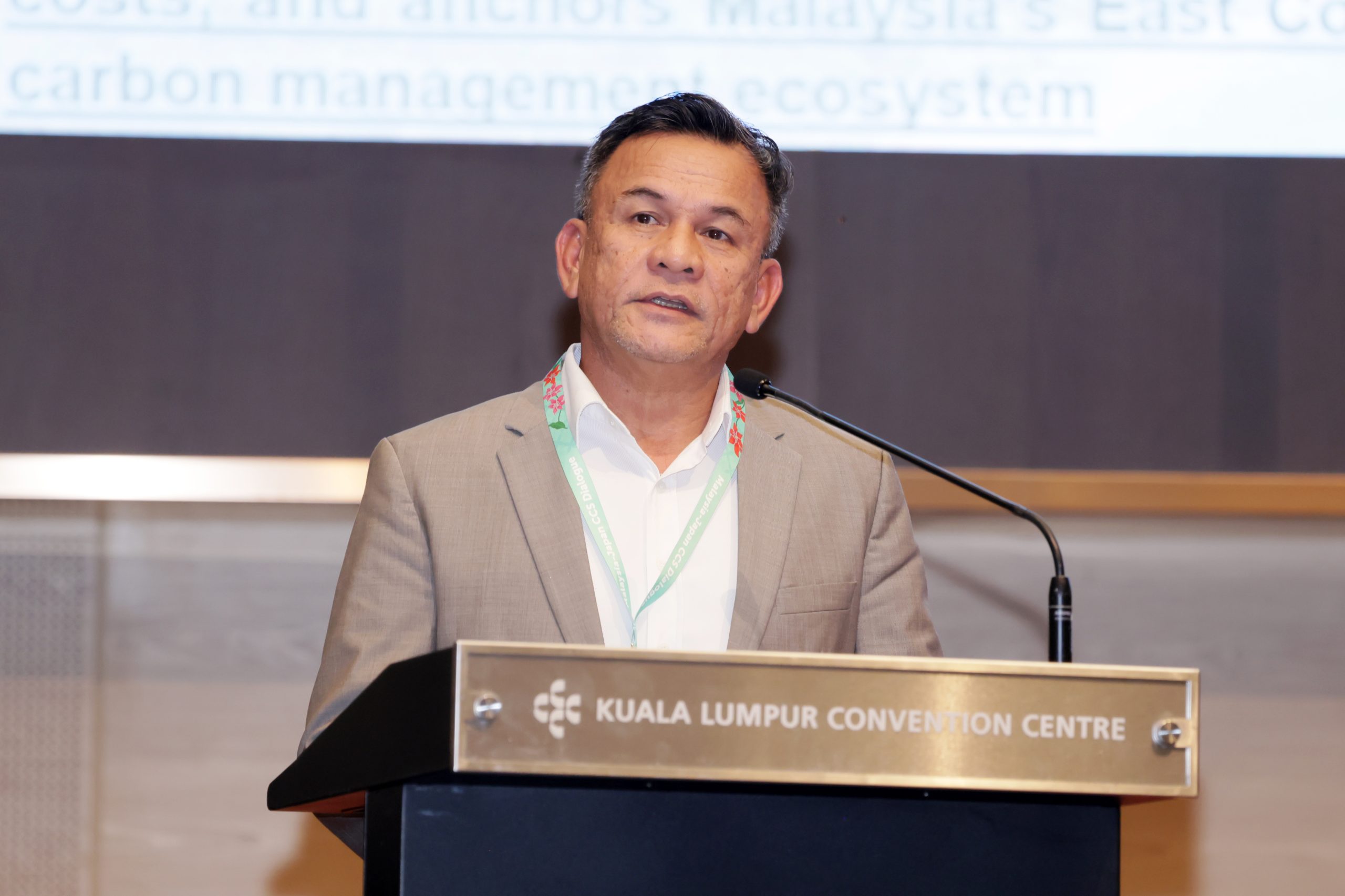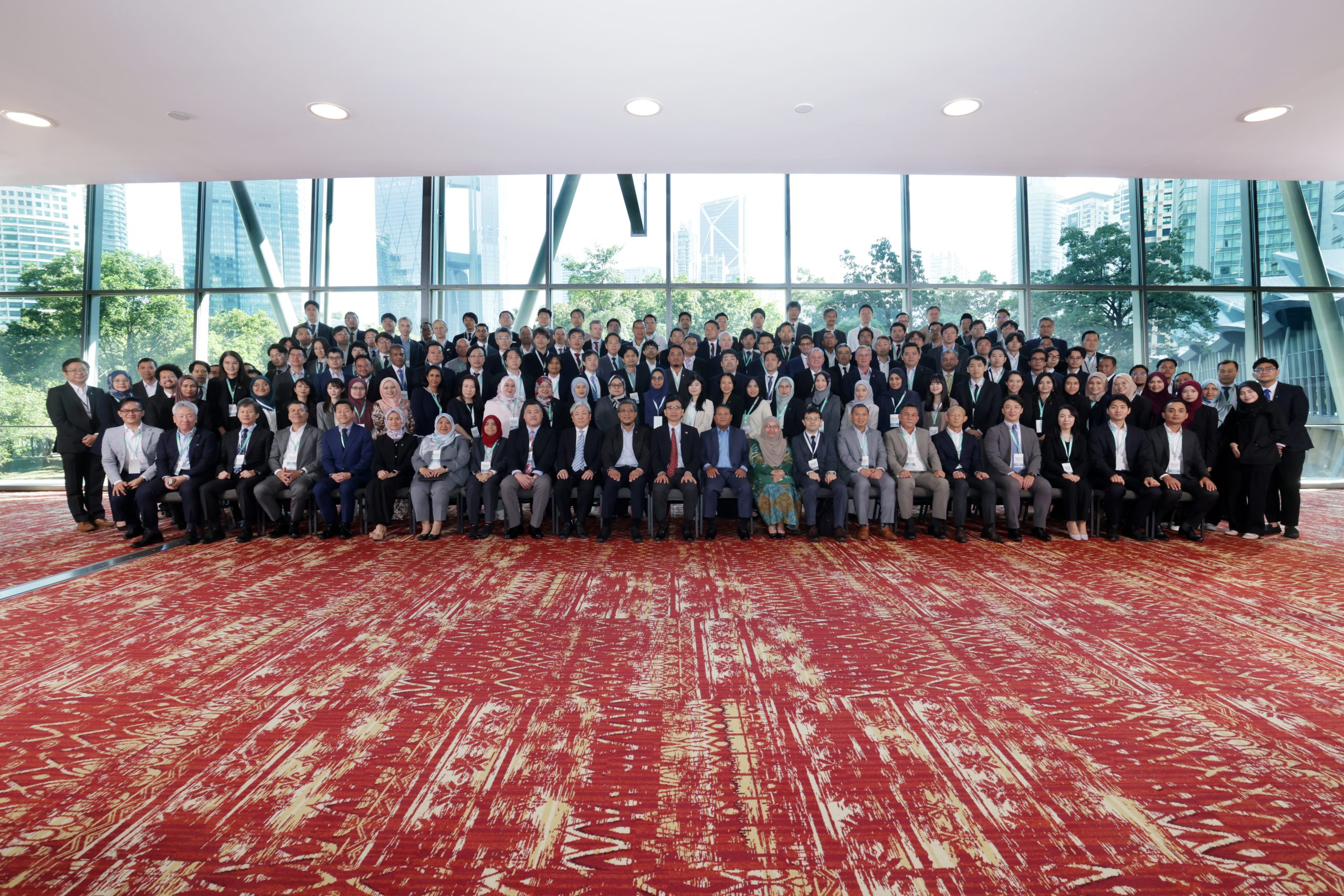

Kuantan Port recently participated in the Bridging Borders: Malaysia–Japan CCS Dialogue organised by PETRONAS and JBIC, supporting ongoing national efforts to advance Malaysia’s carbon capture and storage (CCS) development. Representing the Port, Chief Commercial Officer Mazlim Husin joined the panel session titled Alignment of CCS Value Chain, Facility Delivery & Standardisation of Design, contributing industry perspectives on infrastructure readiness and cross-sector collaboration. Kuantan Port extends its appreciation to PETRONAS for the opportunity to be part of this important strategic dialogue.
During the session, Kuantan Port highlighted the strategic role ports can play as central hubs that enable shared infrastructure, industrial clustering and efficient carbon aggregation. Supported by its established terminals, existing industrial ecosystem and connectivity to key areas including Gebeng, MCKIP, Pekan and the wider East Coast Economic Region, Kuantan Port is well positioned to facilitate the collection and handling of captured carbon from domestic industries as well as international sources. The Port also underscored the future potential of the East Coast Rail Link (ECRL) spur lines, which could enable emitters from the west coast to transport liquefied carbon dioxide (LCO₂) by rail to Kuantan Port, strengthening inter-coastal connectivity and supporting a more integrated national carbon logistics network. This multimodal capability reinforces Kuantan Port’s role in complementing the broader CCS framework and national implementation plans spearheaded by PETRONAS.
As part of Malaysia’s strategic national infrastructure on the east coast, Kuantan Port is proud to be among the early supporting enablers in the country’s CCS journey. The Port remains committed to working closely with PETRONAS, government agencies and industry partners to help strengthen Malaysia’s sustainable industrial development while supporting long-term regional growth and investment.